How to Use PEPstrMOD2
Follow the workflow below to predict and refine the tertiary structure of natural, modified, cyclic, and non-natural peptides using PEPstrMOD2.
Enter MAP-Format Peptide Sequence
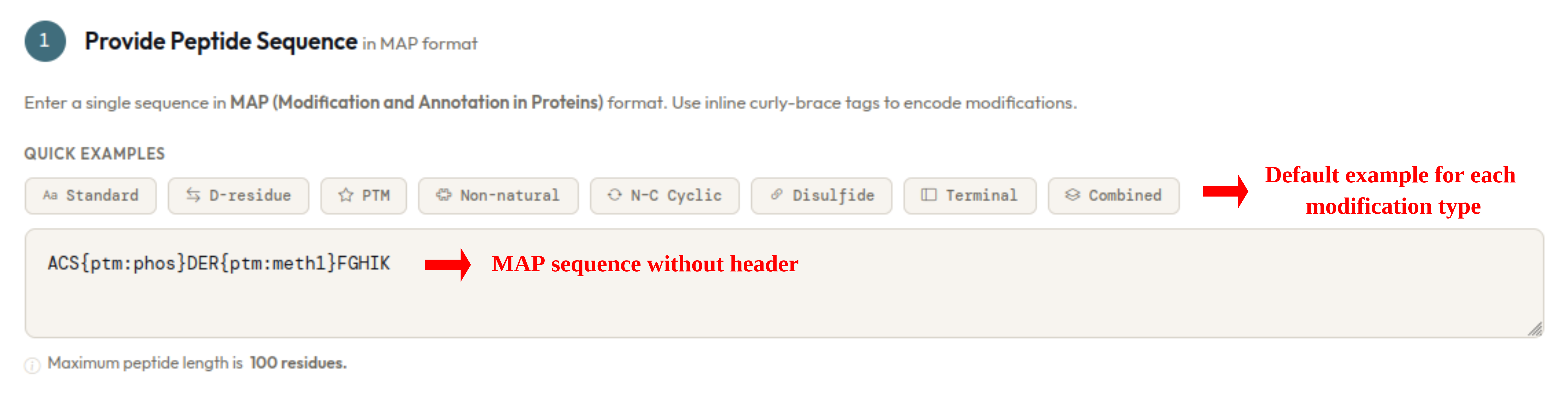
Input your peptide sequence using the MAP (Modification and Annotation in Proteins) format. PEPstrMOD2 supports natural amino acids, D-amino acids, post-translational modifications (PTMs), non-natural residues (NCAAs), terminal modifications, disulfide bonds, and cyclic peptides. A complete list of supported modifications can be found in the user list file.
Select the Initial Structure Predictor
The PEPstrMOD2 web server uses ESMFold to generate the initial peptide structure prior to molecular dynamics refinement. The standalone version of PEPstrMOD2 additionally supports AlphaFold2 (via ColabFold).

Choose the Simulation Environment
Select the molecular dynamics refinement environment. Available options include vacuum simulations and hydrophilic simulations using explicit TIP3P water molecules.

Set the Simulation Duration
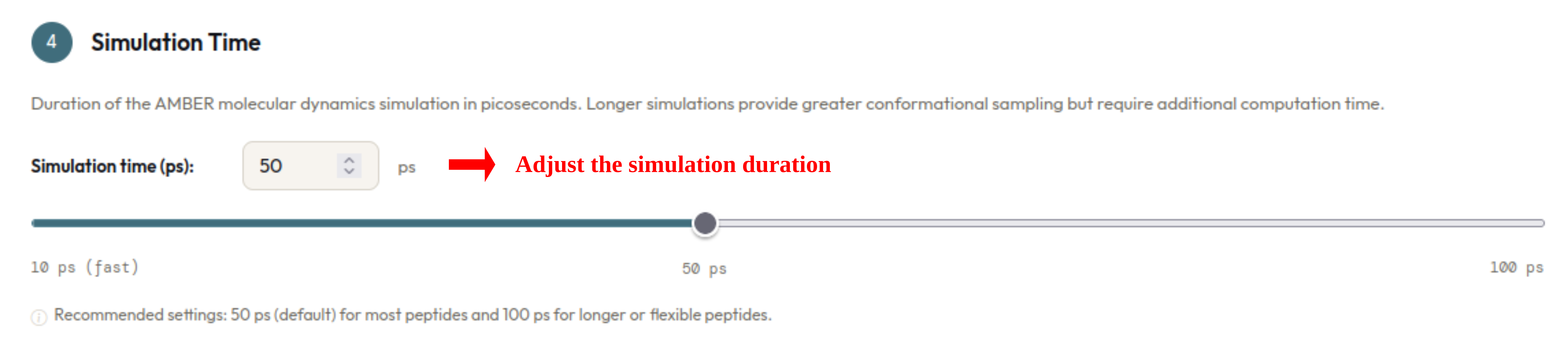
Choose the molecular dynamics production time for refinement. Longer simulations can improve structural sampling but require additional computational resources and execution time.
Configure Analysis Options (Optional)
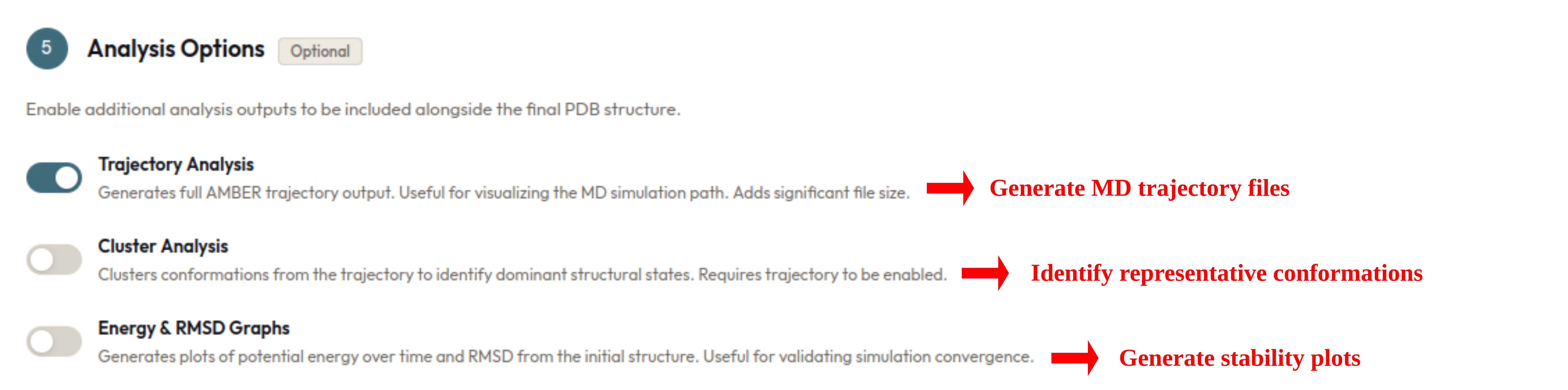
Optionally enable additional analysis outputs to be generated alongside the refined peptide structure. Users can choose to save the molecular dynamics trajectory, perform cluster analysis to identify dominant conformations, and generate energy and RMSD plots for evaluating simulation stability. These analyses provide further insight into the refinement process but may increase the output file size and execution time.
Configure Job Settings and Submit
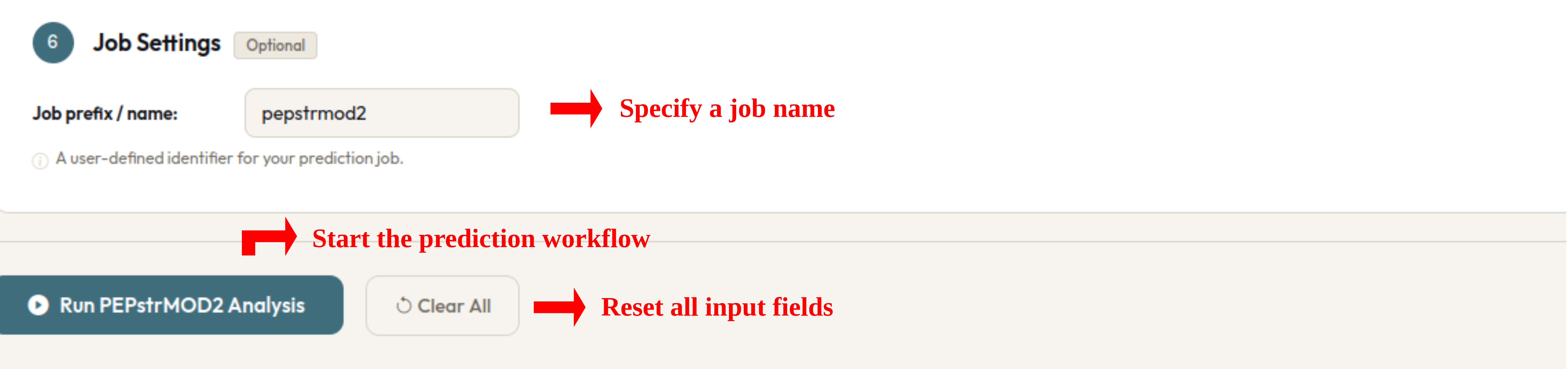
Optionally specify a job name to identify your prediction and use it as the prefix for the generated output files. Once all prediction parameters have been configured, click Run PEPstrMOD2 Analysis to start the structure prediction and molecular dynamics refinement workflow. The Clear All button can be used to reset all input fields and restore the default settings.
View and Download Results
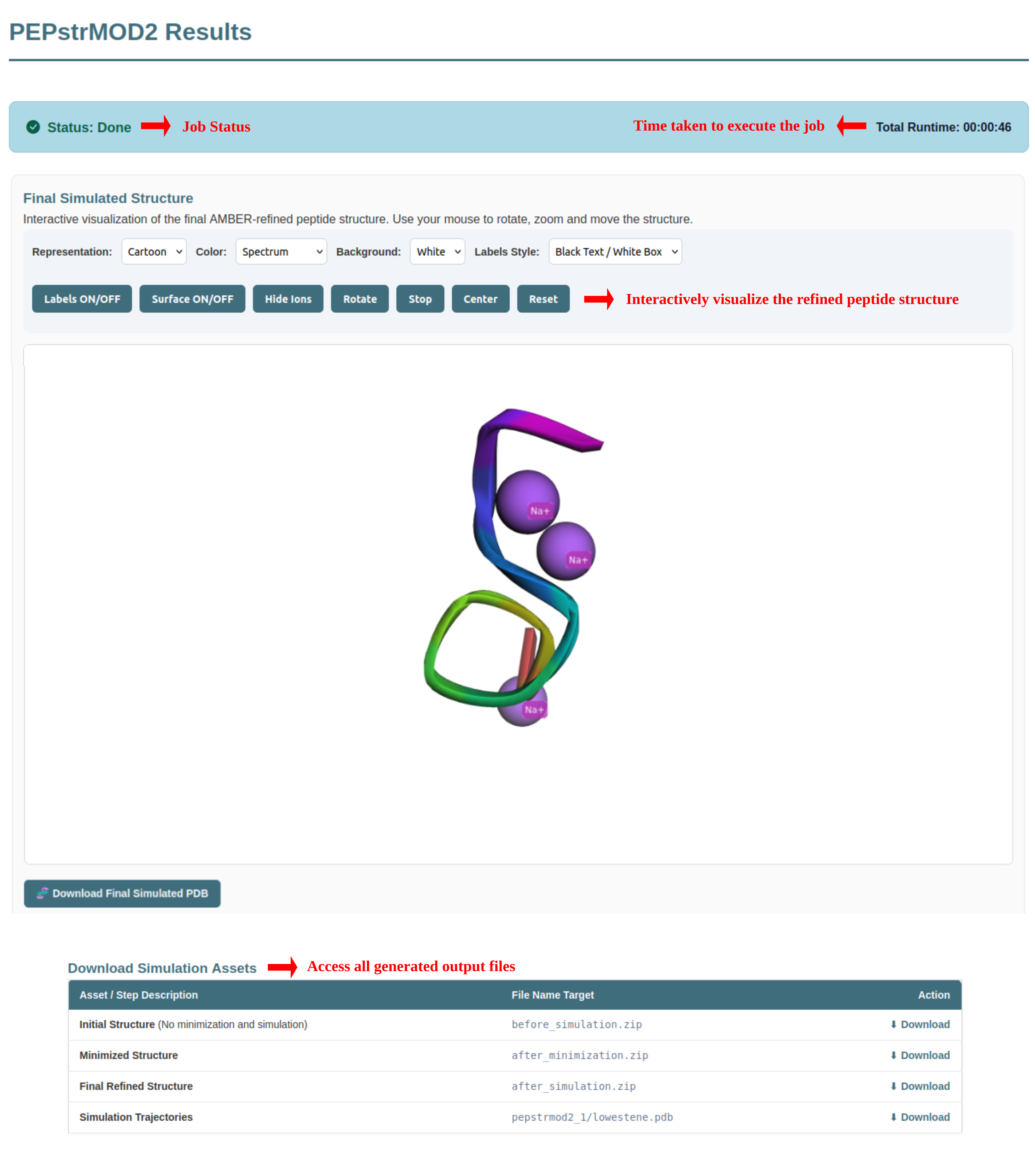
Once the prediction is complete, users can visualize and download the initial predicted structure, minimized structure, MD-refined structure, analysis plots, and trajectory files generated during the simulation workflow.