|
Help
|
|||||||
|
Sequence Submission Sequence Name:-This is fully users ninformation only,users can write only letters or numbers. All other charecters are not allowed. Input Sequence:-Our server provides two options for submitting thew query sequences. The first option user can paste their sequence in the given inbox. The other option user can upload theis sequence files. Sequence Format:-The server can accept both the formatted or unformatted raw antigenic sequences.The server uses ReadSeq routine to parse the input.The user should choose whether the sequence uploaded or pasted is plain or formatted before running prediction.The results of the prediction will be wrong if the format choosen is wrong. Prediction Approach:- The method allow the prediction on the basis of two different appraoches.
Prediction Results:- The prediction results are presented in very user friendly format. The results are consist of mainly two parts.
This part provides the information about the submitted sequence like the sequence, length of sequence and date of scanning. This part also provides the information about the choosen prediction approach.
|
|
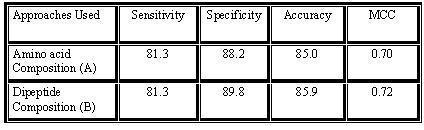
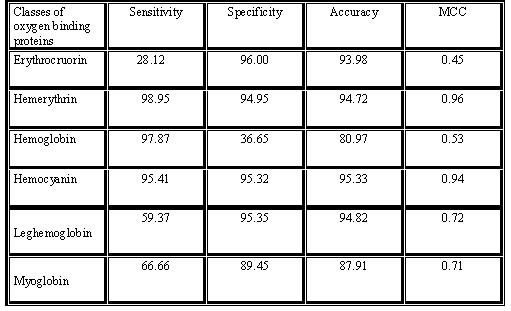
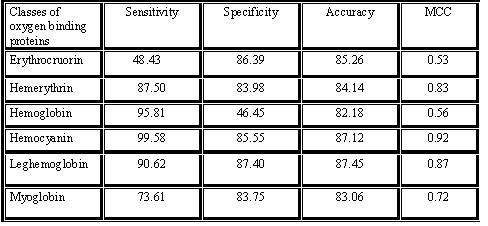
Prediction Result Table 1. The detailed results obtained from oxy with non-oxy protein using different SVM-based modules Table 2. The detailed aminoacid composition results obtained different classes using SVM-based modules
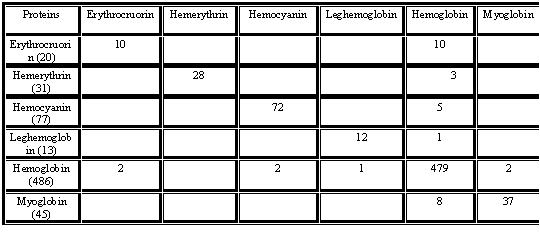
Table 4. Confisional Matrix prediction of all classes
|
|